
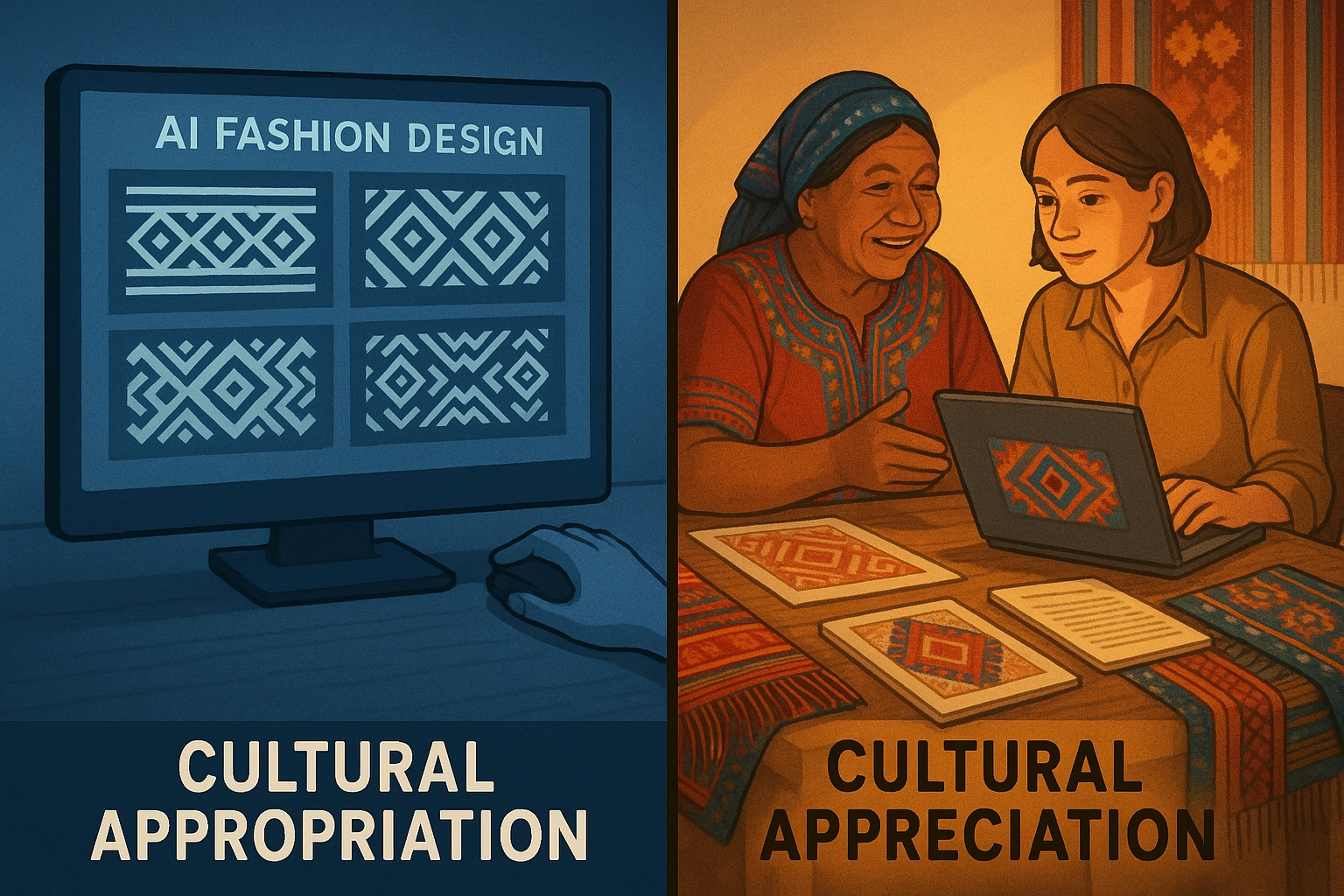
AI fashion design is exploding right now, but here's the thing – most people are doing it wrong. They're grabbing patterns from random cultures, slapping them on generic designs, and calling it "inspiration." That's not just lazy – it's harmful.
The good news? You can create stunning, culturally-rich fashion designs in just 5 minutes while actually honoring the heritage behind them. Let me show you how.
The Problem with Most AI Fashion Design
Before we dive into the solution, let's be real about what's happening out there. Most AI fashion tools treat cultural patterns like free stock photos – something to grab, modify, and use without context. Traditional African kente patterns become "geometric prints." Sacred Native American designs get turned into "tribal patterns." Indigenous textiles become "boho chic."
This approach erases the stories, meanings, and traditions behind these designs. It reduces centuries of cultural knowledge to mere aesthetics.
But here's where it gets interesting – AI can actually help preserve and honor cultural heritage when used thoughtfully.
Your 5-Minute Cultural Fashion Design Process
Minute 1: Choose the Right Platform
Not all AI design tools are created equal. You want platforms that were built with cultural preservation in mind, not just pattern generation.
Refabric's Design Suite is a solid starting point. They've partnered with cultural institutions to properly archive patterns from Islamic geometry, African textiles, and East Asian brocades. Each pattern comes with context about its origins, meanings, and traditional uses.
For Nigerian fashion specifically, the AI Naija Style Creator focuses exclusively on authentic Nigerian attires like Ankara and Aso Oke, placing them in realistic cultural contexts rather than generic fashion scenarios.
The key difference? These platforms work WITH cultural experts and artisans, not around them.
Minute 2: Research Your Selected Pattern
Here's where most people skip ahead – don't do that. Spend this minute actually learning about your chosen pattern.
Good cultural AI platforms will tell you:
- The pattern's cultural origin and significance
- Traditional color meanings
- Appropriate contexts for use
- Any sacred or ceremonial restrictions
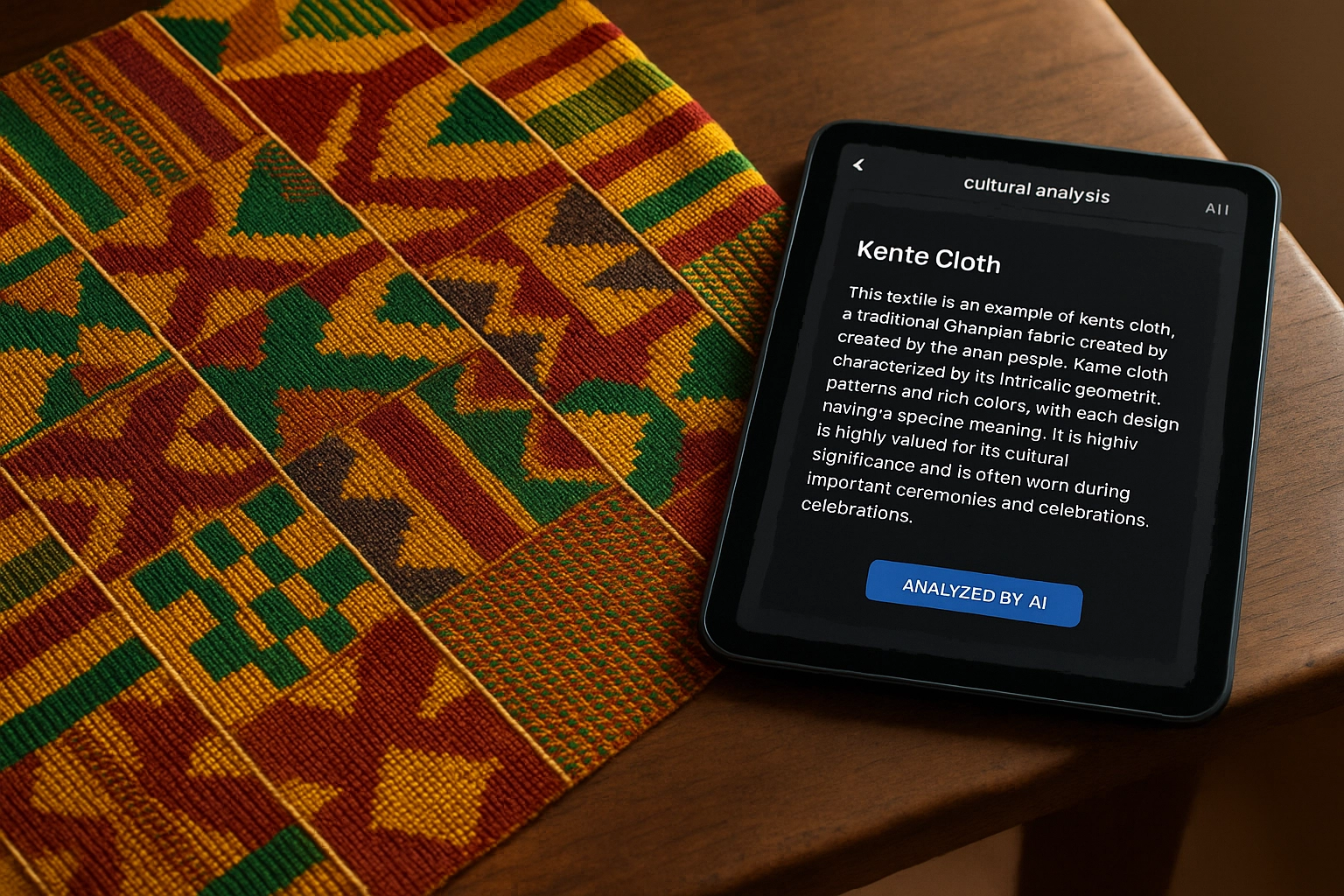
For example, if you're working with Adinkra symbols from Ghana, you'll learn that each symbol carries specific philosophical meanings. The Sankofa bird isn't just a cool bird design – it represents learning from the past to move forward wisely.
Minute 3: Generate Respectful Variations
Now for the actual design work. Use the AI's generative capabilities to create variations that enhance rather than alter the cultural elements.
Focus on:
- Color exploration within culturally appropriate palettes
- Scale adjustments that maintain the pattern's integrity
- Composition changes that respect traditional layouts
- Modern applications that honor the original context
The AI should be suggesting variations that feel like natural evolution of the tradition, not random mutations.
Minute 4: Context and Application
This is crucial – your design needs to land in an appropriate context. The same pattern that's perfect for contemporary streetwear might be completely wrong for formal wear, depending on its cultural significance.
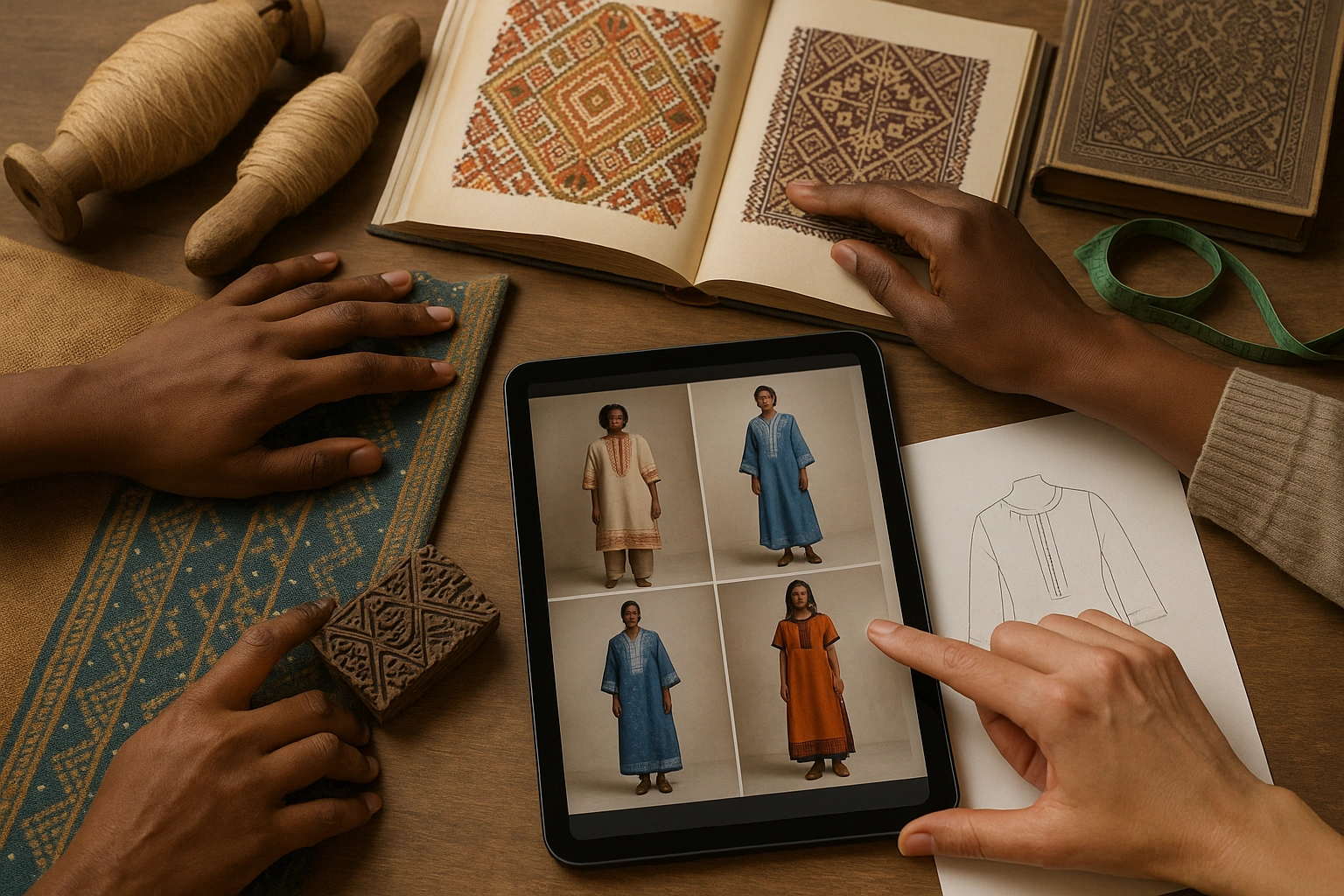
Use AI simulation tools to visualize your design in realistic settings. Many platforms now offer context-aware previews that show how patterns traditionally appear in ceremonies, daily wear, or special occasions.
Minute 5: Cultural Accuracy Check
Before you finalize anything, run through this quick checklist:
- Does your design enhance or diminish the original pattern's impact?
- Are you using colors that respect traditional meanings?
- Would this design make sense in its original cultural context?
- Are you crediting the cultural source appropriately?
If you can't answer "yes" to all of these, spend another minute refining.

Essential Tools for Cultural Fashion Design
Refabric remains the gold standard for culturally-conscious AI fashion design. Their database includes properly archived patterns with full cultural context and collaboration with traditional artisans.
AI Naija Style Creator excels specifically for Nigerian fashion, offering authentic representations of traditional attires in contemporary applications.
Cultural Heritage Archive APIs let you access pattern databases from museums and cultural institutions worldwide. These often include the academic research and cultural documentation you need for respectful design.
Community-Driven Platforms connect you directly with artisans and cultural experts who can provide feedback on your designs before you finalize them.
The Cultural Sensitivity Framework
Here's your framework for keeping things respectful:
Collaborate, Don't Appropriate
Work with people from the cultures you're drawing from. Pay them. Credit them. Listen to them when they tell you something isn't appropriate.
Preserve, Don't Exploit
Your designs should help preserve cultural knowledge, not just profit from it. Consider how your work contributes to cultural continuity.
Context Matters
A pattern appropriate for casual wear might be sacred in ceremonial contexts. Understanding these distinctions is non-negotiable.
Give Back
If you're profiting from cultural designs, find ways to support the communities that created them.
Common Mistakes to Avoid
Mixing Sacred and Secular Elements
Just because two patterns are from the same culture doesn't mean they can be combined. Some elements are meant for specific contexts only.
Ignoring Color Significance
Colors often carry deep cultural meanings. Red might represent celebration in one culture and mourning in another.
Removing Cultural Context
Don't strip patterns of their stories and meanings just to make them "more marketable."
Skipping the Research Phase
Five minutes includes research time for a reason. Rushed cultural appropriation is still cultural appropriation.
The Future of Culturally-Conscious AI Design
We're moving toward AI tools that don't just generate patterns – they preserve cultural knowledge. These platforms are being built with input from cultural experts, ensuring that traditional craftsmanship knowledge doesn't get lost in digital translation.
The most exciting developments are happening in collaborative spaces where AI serves as a bridge between traditional artisans and contemporary designers, rather than replacing human cultural knowledge with algorithmic guesswork.
Making It Sustainable
The beauty of this approach is that it's sustainable on multiple levels. Digital fabric simulation means you can experiment extensively without creating physical waste. Cultural collaboration ensures you're contributing to heritage preservation rather than exploitation.
Plus, when you create designs that genuinely honor their cultural sources, they tend to resonate more deeply with audiences. Authenticity has staying power that surface-level appropriation never does.
Your Action Plan
Start small. Pick one cultural tradition that genuinely interests you – not just aesthetically, but historically and socially. Spend time learning about it beyond just the visual patterns.
Find the right AI platform that respects that tradition. Connect with people from that culture if possible. Create your first design following the 5-minute process above.
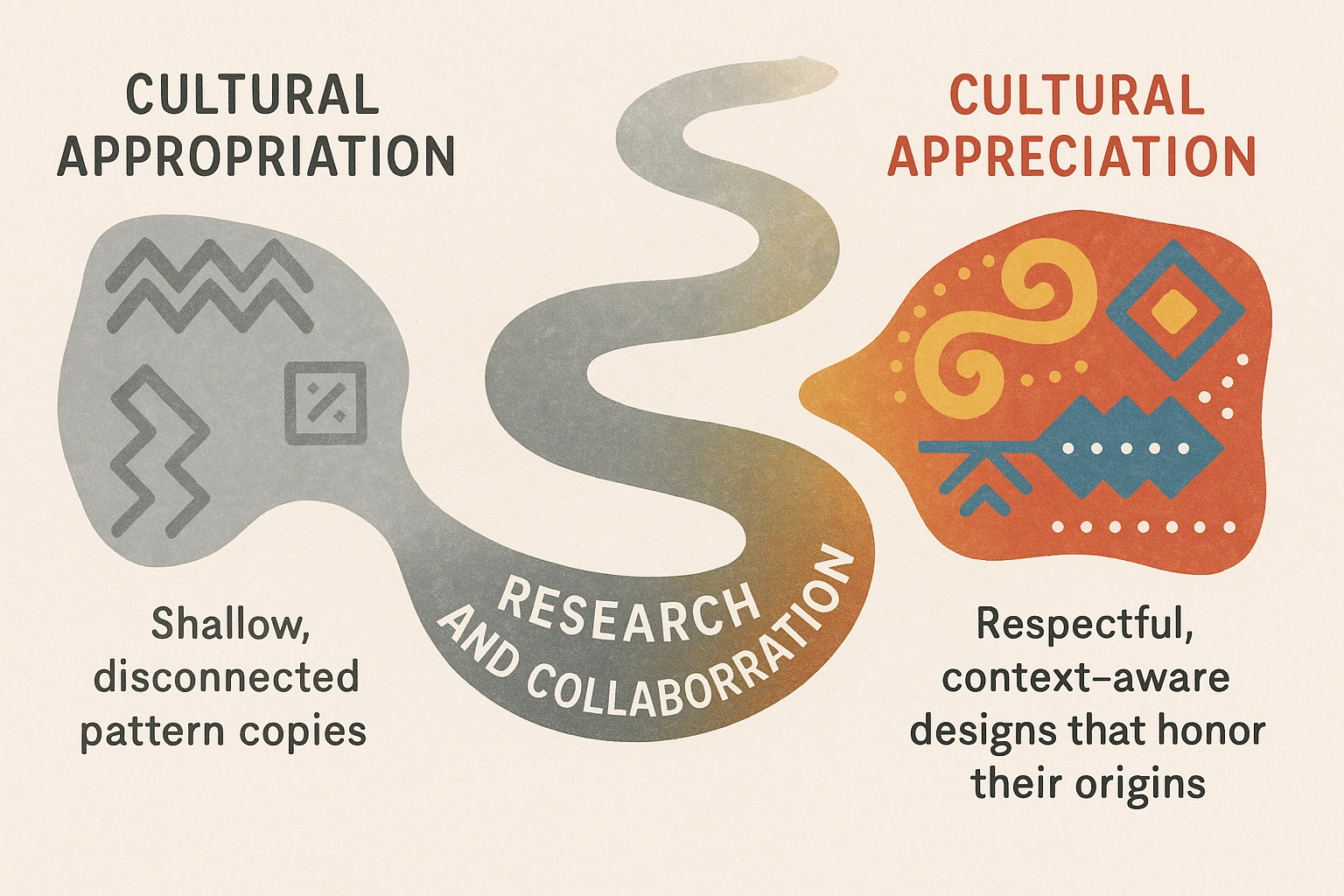
Most importantly, remember that speed doesn't have to mean superficiality. Five minutes of thoughtful, informed design work beats hours of cultural appropriation every time.
The goal isn't just to create beautiful fashion designs – it's to create designs that honor the cultures they draw from while contributing to their preservation and global appreciation. When you get this right, everyone wins.